
Finance · 10
The Intelligent Investor
Benjamin Graham
Buy businesses with a margin of safety, and never let the market's moods make your decisions.
Five questions this book answers, each in a short piece. Read them, or listen as every word lights up.
Before the first truck
The test comes first
A profit, by itself, tells you little about the decision behind it. Zweig imagines driving 130 miles at 130 miles an hour instead of 65. Arriving in half the time hardly makes the drive safe.
In Graham's story your partner, Mr. Market, comes by every day with an offer to buy your share or sell you his. You can take an attractive price, or let him come back tomorrow.
The first reading is taken on the empty deck, before any load goes on.

The proof load
Five times the load
For railroad bonds, Graham's historical standard was pretax earnings of five times the interest and other fixed charges. Penn Central had a famous name and enormous scale. In 1967 and 1968 it covered its interest less than twice, and in 1970 it went bankrupt.
Graham calls that room a margin of safety, a measurable cushion between the price paid and a conservative appraisal. Paying sixty dollars for value conservatively estimated at ninety leaves some room for the estimate to disappoint.
Through the level, five loaded trucks roll on beside the staff, and the cross hair stays on the target.

The five questions
Five questions, one span
In the order the book argues them.
- When everyone else seems to be getting rich, how can you tell whether you are investing or being rewarded for a risk you cannot afford?What a winning investment cannot tell youA rising price can reward a sound decision or conceal a reckless one. Graham's test starts before the result arrives.
- How do you invest for decades when you may need cash next year, and why can playing it safe make you poorer?Safe for next year, safe for twenty yearsA stable balance can lose buying power. A growing portfolio can fail when you need cash. Graham's answer starts with the spending date.
- When can a great business be a terrible investment, and how much should you pay when its profits and future are both uncertain?How much success have you already paid for?A strong business still needs a defensible price. Finding one starts with the profits its owners can actually keep.
- With limited time and experts competing for bargains, when can doing less earn you more, and what evidence would justify trying to beat the market?What extra investing work has to earnTrading can consume a good decision's reward. Beating a simple portfolio requires evidence of an advantage that survives costs and competition.
- How do you stay in control when advisers and company managers know more than you and can profit even when you lose?Who benefits when you hand over the decisions?You cannot inspect every action an expert takes. You can examine the job, the incentives and what happens to your money.
Load off
The last reading
With the load off the span, the last reading goes in the field book. Graham pairs this cushion with diversification across sound purchases, because individual judgments still fail.
A margin of safety allows for mistakes; it cannot eliminate them.
Start with question oneBuy the book

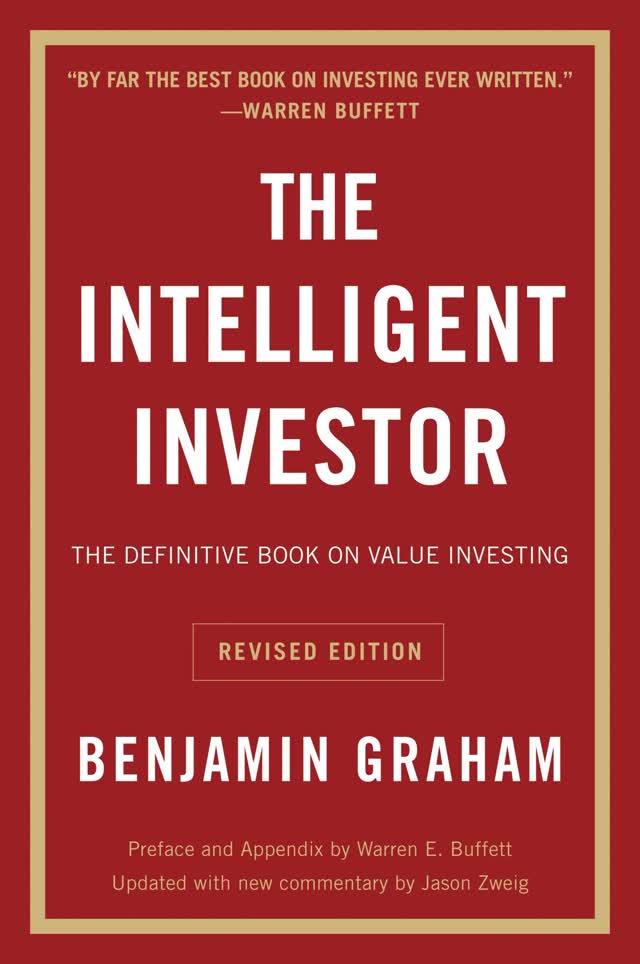
Published by HarperCollins. Cover shown to identify the book. Benjamin Graham drawn as an editorial caricature.