Finance · 02
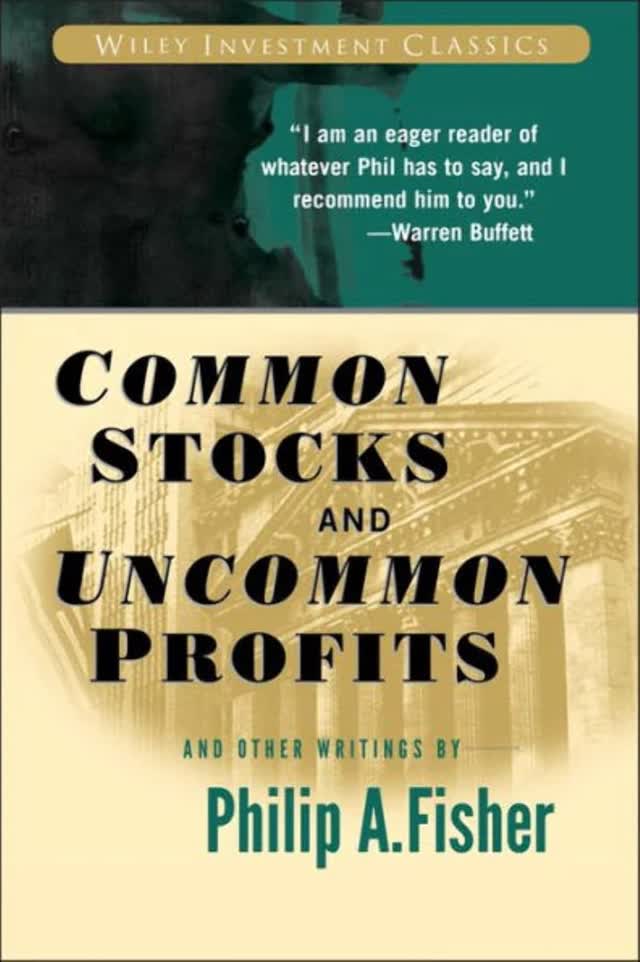
Common Stocks and Uncommon Profits
Philip A. Fisher
Own a few outstanding growth companies you know deeply, and hold them for years.
Five questions this book answers, each in a short piece. Read them, or listen as every word lights up.
Five or six
A few, properly arranged
Fisher compared a portfolio to soldiers stacking their rifles. Two may make an unstable stack. Five or six, properly arranged, can support one another. Fifty need not make it any more secure.
Getting down to a few was most of the work. He bought roughly one of every two hundred fifty companies he considered, and most were gone long before he met anyone who ran them.
- 250 considered
- 40 to 50 looked at
- 2 to 2½ management visits
- 1 bought
Holding
Let the best one keep growing
Fisher first filed Ampex among small, risky companies. In 1956 and 1957 it tripled in size, its profits grew faster still, and he moved it into a safer group. A larger share of the portfolio could mean a stronger business. The price alone could not have proved it.
He also asks you to imagine owning a share of three classmates' future earnings. Ten years later one of them is near the top of a major company. Would you sell that contract because it has already made you money?
A large past gain does not use up future earning power.
The five questions
In the order the book argues them.
- With near-term expenses covered, when can profits kept inside a company buy more future spending power than bigger dividends?What happens to the dividend you don't receive?Profits kept inside a company can build future income, defend the existing business, or disappear into bad decisions. The difference matters.
- How can a company keep growing profitably after today's hit products fade and its star leaders leave?The company that can make the next oneA hit product buys time. Continued growth depends on people who can develop its successor, sell it profitably, and eventually replace their leaders.
- With limited time and access, how can you tell a durable business from a persuasive story before risking your savings?The research that ends before a purchasePhilip Fisher's investigation starts outside the company, tests the sales pitch, and leaves room for an honest refusal to invest.
- Without predicting the market, how can you judge whether a growth stock deserves today's price despite weak profits or a high valuation?What today's price assumes about tomorrowA costly-looking stock or a weak profit report needs a business explanation before it becomes a buying opportunity.
- With only a few businesses you can follow closely, how do you hold for years without letting one mistake or stubborn loyalty derail your plans?The work of holding onPatient ownership depends on affordable mistakes, reasons to sell, and a continuing check on the person making the decisions.
Selling
Sell when the business changes
Fisher kept three reasons to sell a company he had chosen with care. The purchase was a mistake. The business has deteriorated or run out of room to grow. A clearly better opportunity has appeared.
A past gain is not one of them.
Start with question oneBuy the book
Published by Wiley. Cover shown to identify the book. Philip A. Fisher drawn as an editorial caricature.


