Book 01 — five questions
Atomic Habits
Tiny changes, repeated, decide who you become.
One mark. Keep scrolling.
For months it looks like nothing
A leading manufacturer would not sell bikes to the British cycling team; being seen on them was thought bad for business. Dave Brailsford's answer was not ambition. It was hundreds of boring adjustments — seat shapes, tyre grip, hand washing, white paint inside the equipment truck so that dust would show.
An ice cube in a room at 25 degrees is still an ice cube at 26, 27, 28, 29, 30, 31. Every degree is necessary. None of them produces any evidence.
Then the thirty-second degree
The last degree did not do the work. Clear calls the whole climb the Plateau of Latent Potential, and its discouraging middle the Valley of Disappointment — the honest name for month two of any new routine.
Which is why a goal cannot be what separates people: everyone on the start line wants the gold. Goals point. Systems move. Clear's own system was an article every Monday and Thursday. It produced only the next article, and then a readership, a business, and this book.
Every repetition is a vote
The thing that actually carries you is stranger. Each action is a small piece of evidence about who you are. Two people turn down a cigarette. One says "I'm trying to quit", which quietly keeps smoking inside the story of who they are. The other says "I'm not a smoker".
No single vote wins the election, and a missed day does not lose it. The majority does. Choose the kind of person, then make the action small enough that you can keep the promise.
The five questions
They run in the order the book argues them, from the first premise to what to do about it. Each one is a short piece of about four minutes.
- Why can a change too small to show results for months reshape a life more reliably than an ambitious goal, and how can systems and identity keep it alive through the invisible phase?The team nobody would sell a bike toTiny actions look like nothing for months. Clear's argument is that this is exactly when they are doing the work.
- If repeated behavior feels like conscious choice, how much is actually an automatic prediction triggered by timing, place, and visible cues, and how can those signals be redesigned without constant vigilance?The clerk who cut a customer's credit card in halfMost of what you did today was started by a signal you never noticed. Clear's case for redesigning the signal instead of fighting the urge.
- When the brain wants relief now but meaningful outcomes arrive later, how can desire be redirected rather than suppressed, so anticipation, emotion, and belonging pull toward the better action?A goose, a volleyball, and what you actually wantCravings are forecasts. Clear's argument for rewriting the forecast instead of gritting your teeth against it.
- How can the better action become the path of least resistance in under two minutes while the worse one carries immediate friction or cost, without turning life into coercion or metric-chasing?Why a hundred bad photographs beat one perfect oneMake the good thing start in under two minutes, make the bad thing cost a little, and keep the scoreboard in its place.
- Once repetition creates competence, how can a person keep improving without boredom, rigid identity, genetic fatalism, or blind automaticity, while choosing challenges that fit existing strengths and still demand growth?Bored, and doing the lift anywayRepetition makes you competent. Staying good takes the right game, the right level of difficulty, and a loose grip on who you think you are.
Read the book
These five pieces carry the argument. They are not a substitute for it: the examples, the exercises and the endnotes are most of why the book works.
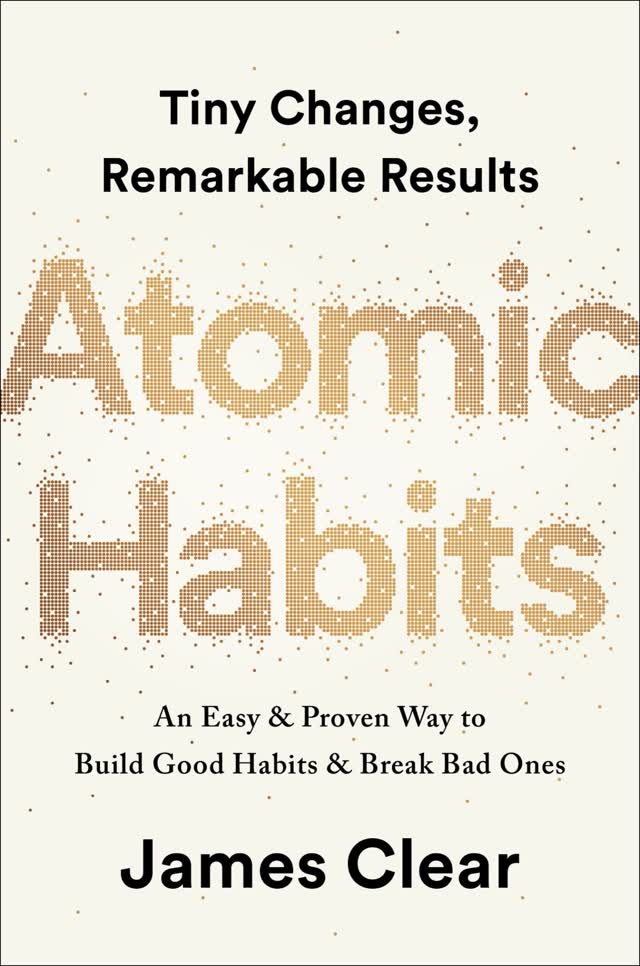
Buy Atomic HabitsPublished by Avery, Penguin Random House
The cover is shown to identify the book under discussion. James Clear appears as an editorial caricature drawn for this site. Cover artwork remains the property of its publisher.