Business · 01
Good Strategy Bad Strategy
Richard Rumelt
Good strategy names the real obstacle and concentrates effort on a few coordinated actions that overcome it.
Five questions this book answers, each in a short piece. Read them, or listen as every word lights up.
The Jet Propulsion Laboratory
A lander for the moon
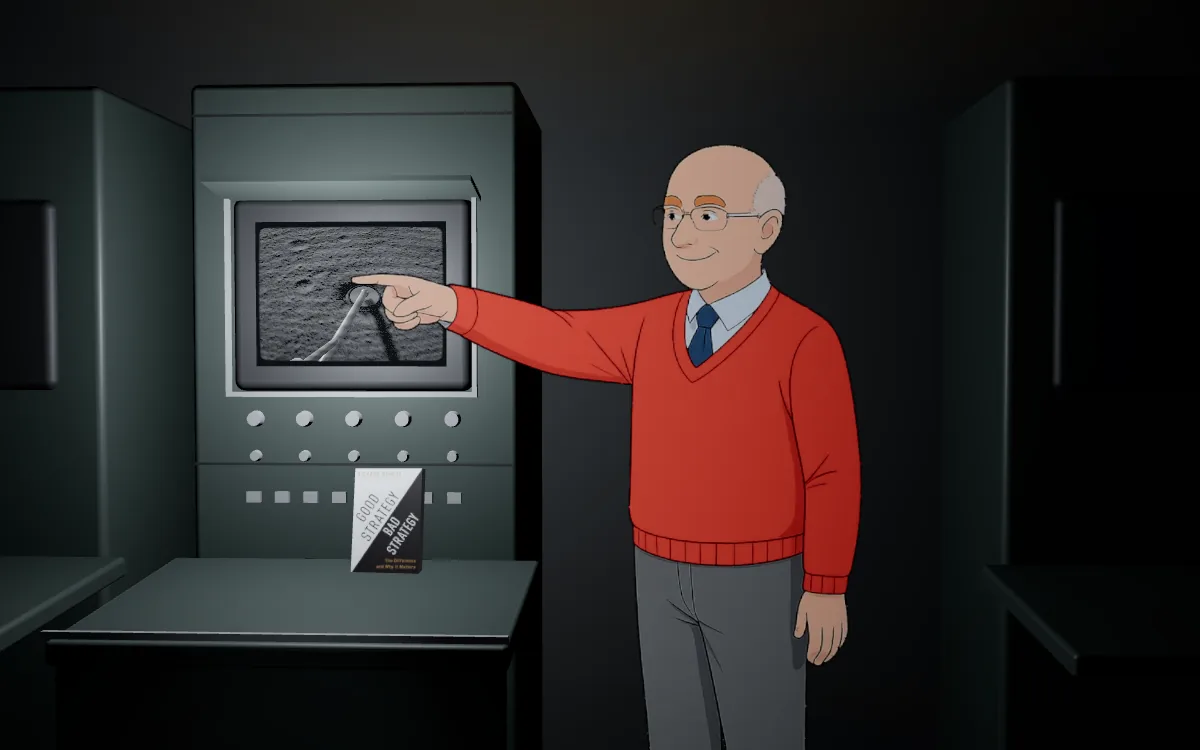
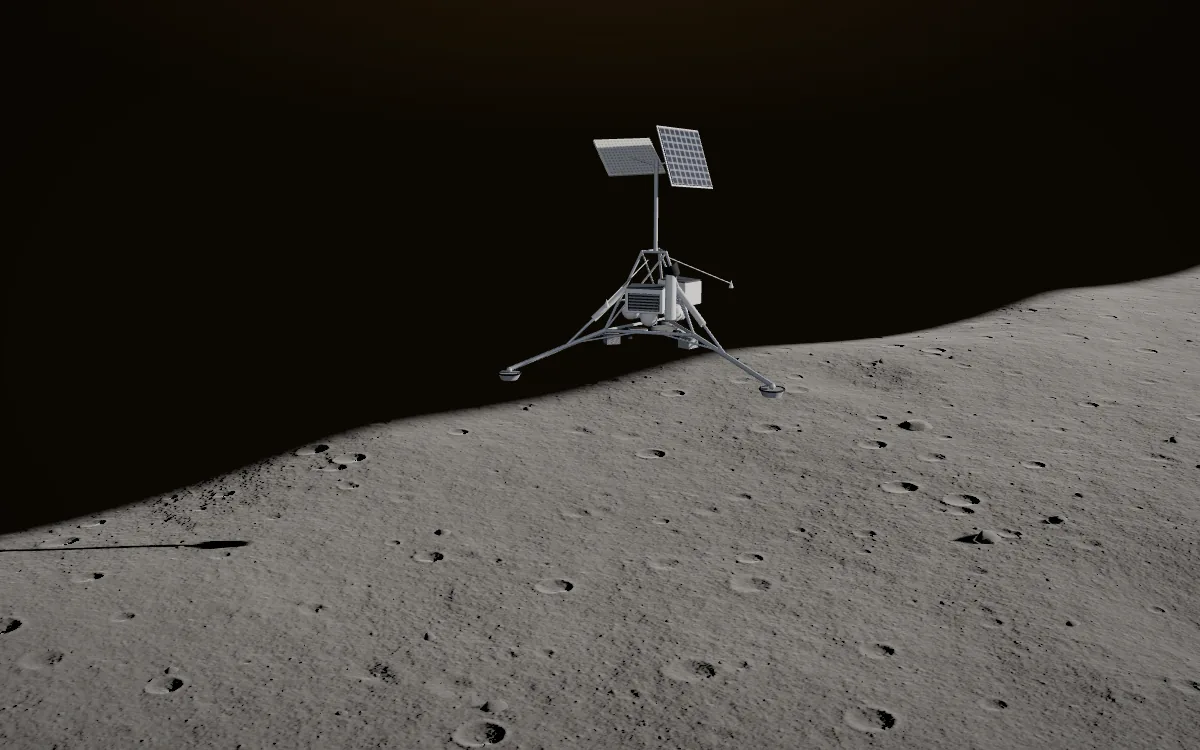
Richard Rumelt worked at the Jet Propulsion Laboratory while it was developing Surveyor, an unmanned lunar lander. Its engineers needed requirements they could design against.
An ambitious demand passed downward unchanged merely hands the original problem to someone else.
The surface
Any lander could be argued away
Scientists disagreed about what the moon's surface might be like.
- Powdery?
- Sharply crystalline?
- Covered with boulders?
Any proposed lander could be attacked by imagining a different surface. Without requirements to design against, the team faced an open-ended argument instead of a bounded engineering task.
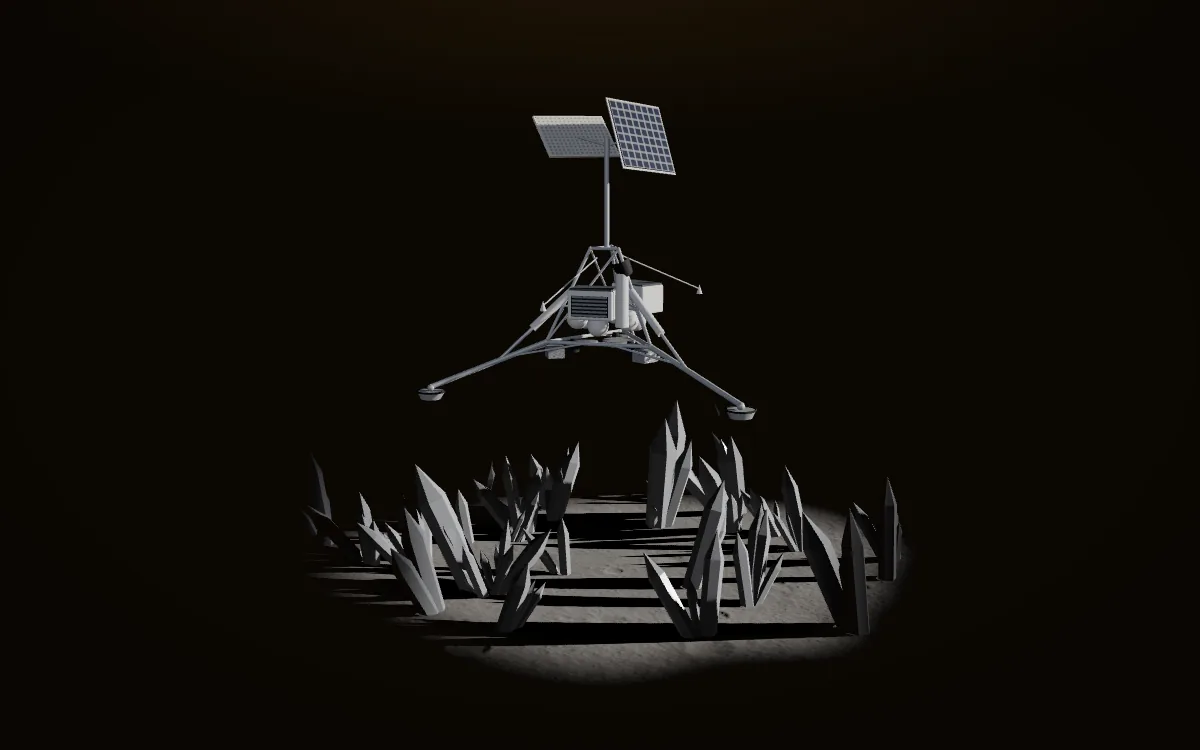
Phyllis Buwalda's model
A working assumption
- Surface
- Hard, grainy
- Slopes
- Limited
- Stones
- Scattered, with boulders
Phyllis Buwalda supplied a practical model of the surface. Rumelt stresses that it was a considered working assumption the engineers could use.
Her reasoning included the larger mission. If the moon proved too hostile for a straightforward lander, the human landing program would face a much deeper problem anyway.
The leader's part
A problem people know how to tackle
A carefully chosen specification turns an ambitious demand into a problem people know how to tackle.
Leaders must settle enough working assumptions to give people a solvable task, without pretending the assumptions are established facts.
Surveyor
The landings succeeded
Subsequent Surveyor landings succeeded, and the history Rumelt cites describes the requirements as remarkably accurate.
Rumelt calls the essential structure of a strategy its kernel, made of a diagnosis, a guiding policy and coherent action.
The five questions
Five questions, one kernel
In the order the book argues them.
- With too little time or money to pursue every goal, why can agreement and ambition produce a plan that solves nothing?What agreement leaves undecidedAn ambitious plan can win everyone's support while leaving the obstacle and the required choices untouched.
- How can a team with fewer resources beat a stronger rival when improving every activity is impossible?Where fewer resources can matterRelative strength depends on the contest, the objective and how the activities fit together.
- Why can a growing business with better products still earn poor returns when capital is scarce?Why a better business can be a poor investmentA growing business can create real customer value while tying up capital that earns little for its owner.
- When technology or rules change, how can yesterday's success become a trap, and what should an organization rebuild first?Where rebuilding has to beginOld routines, entrenched norms, profitable delay, and neglect call for different repairs.
- How do you commit to action under uncertainty without mistaking confidence, consensus, or a winning streak for evidence?A decision you can learn fromA strategy needs enough conviction to act and enough exposure to evidence to change. Rumelt explains how to hold both.
The result answers back
A decision you can learn from
Commit to a hypothesis that observable results could challenge. A definite decision gives learning somewhere to begin.
Start with question oneBuy the book
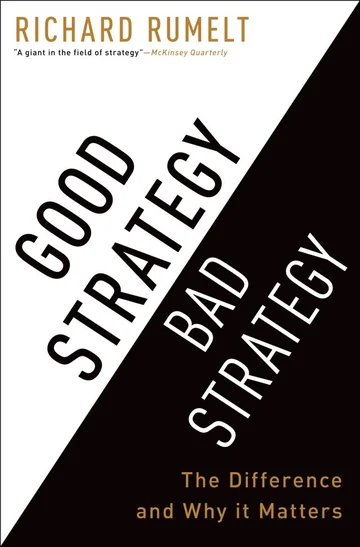
Published by Crown Business. Cover shown to identify the book. Richard Rumelt drawn as an editorial caricature.