Book 05
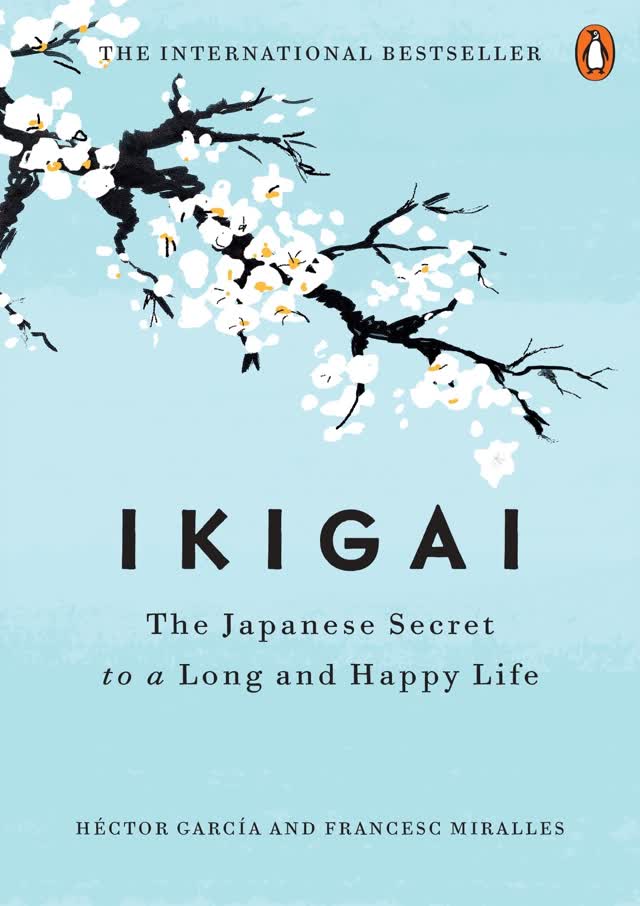
Ikigai
A renewable daily reason to get up, not a grand destiny.
Five questions this book answers, each written as a short piece you can read in about four minutes, or listen to with the words lit as they are spoken.
Scroll. The sun moves.
Four circles of light
The diagram everyone has seen puts what you love, what you are good at, what the world needs and what you can be paid for into four circles, and calls the middle of them ikigai. That diagram is not in this book. Watch it anyway. Where the circles meet, the light simply adds up.
- love, what you love
- craft, what you are good at
- need, what the world needs
- living, what you can be paid for
The intersection is not a place
Scroll a little further and the sun moves. The circles slide out of true, the bright middle goes out, and the diagram has nothing to say about that. García and Miralles did their reporting somewhere else: in Ogimi, a village in the north of Okinawa, asking people past a hundred what got them out of bed.
Nobody described an intersection. They described a morning. Incense at the family altar, a greeting on the street, the short radio exercise routine done from a wheelchair if that is what it takes. The word joins living with worth, and it still asks you to do something today. It can be found, revised, replaced. That is why it survives a career ending.
The five questions
They run in the order the book argues them: the reason to get up, the body that has to last, the people who keep it going, what to do about what you cannot change, and the ordinary routines where absorption actually happens.
- Why might never fully retiring from meaningful effort be healthier than chasing permanent leisure, and how can an ordinary, changing reason to get up link psychology, work, and aging across a lifetime?The man who retired for one dayWhy the book thinks a job can end but participation should not, and how to find the next reason to get up.
- How can deliberately doing less, eating before full, moving gently but often, sleeping enough, and replacing chronic strain with manageable challenge, outperform "more and harder" when physiology and behavior must work together for decades?The world's oldest people cannot agree on anythingSushi, no meat, two meals a day, cigarettes until 120. What the contradictions say about doing less for longer.
- When does relying on other people make an individual more, not less, resilient, and how can friendship, mutual aid, and service preserve autonomy while celebration and shared belief sustain belonging across a long life?A town that keeps its friendships in a binderOne day in Ogimi, where help has a calendar, and what it teaches about leaning on people without losing yourself.
- How can accepting painful emotions, uncontrollable limits, and impermanence create more agency, and when should adversity be endured, recovered from, or used to redesign life so it grows stronger?The donkey that tightened its own ropeMorita's donkey, a cracked cup, and a shrine rebuilt every twenty years. How accepting what you cannot change gives you more to do.
- How can ordinary mental and physical routines use constraints, in focused work, movement, and breath, to produce absorption, skill, calm, and clues to what matters without collapsing into boredom, anxiety, distraction, or rigid outcome fixation?One hundred and fifty cups, twelve keptHow a few good limits, at a desk, at a sink, or in a breath, turn ordinary routines into absorption.
Again tomorrow
Ogimi has a written declaration that says, roughly, at eighty you are still a child. It also warns the town against leaning too hard on its children. Both at once. The light comes back round in the morning, and the only question the book really asks is whether you are up for it.
Buy the bookPublished by Penguin Life, Penguin Random House