Finance · 04
Developing an Investment Philosophy
Philip A. Fisher
Find the businesses the crowd misjudges, then stay patient only while the reasons hold.
Five questions this book answers, each in a short piece. Read them, or listen as every word lights up.

Development
Everyone heard the same account
In January 1978, ten Raychem executives spent a day explaining their business to institutions, brokers and advisers. Fisher was there. Anyone in that audience heard the same explanations.
The shares barely moved for weeks. Over the next year or two the earnings arrived as the executives had described, and the stock more than doubled.
Fisher thought investors were still judging the company by its earlier disappointments.

Test strip
Two opposite mistakes
In 1929 he bought three stocks because they looked cheap against their earnings. One made locomotives. By 1932 the shares were worth a tiny fraction of what he had paid.
In 1969 he bought a good company with a president he considered brilliant and honest. Years later he sold for little more than he had paid, and inflation had eaten into what those dollars could buy.
Between the two lies the exposure he wanted, a business that can grow at a price that leaves room to benefit.
When he barely knew a company's managers, he bought a small position first, the way a printer makes a strip before a full sheet.

Three years
Patience with a deadline
Fisher would wait years for a company to prove itself. If his opinion was unchanged but the shares had not performed after three years, he generally sold.
He broke that rule once, for Rogers Corporation, on fresh evidence. Its president disclosed bad news candidly, and dropping one draining project let other products move.
The five questions
In the order the book argues them.
- If the financial reports are public, how can you tell an overlooked business from a story that everyone wants to believe?What the numbers leave unexplainedPhilip Fisher looked beyond shared financial reports to test what customers, competitors, and managers could tell him about a business.
- What lets a company grow for decades without its inventions, size, or success becoming its undoing?When a better invention isn't a better businessFisher follows growth beyond the laboratory, into customers' budgets, company finances, and the people who must make it work.
- If your goal is growth that beats inflation, when is a cheap stock expensive and an unpopular business a bargain?A good company can still cost too muchA low valuation needs a business explanation. Fisher's opposite mistakes show why neither cheap shares nor impressive growth settle the decision.
- With limited time and capital, when can fewer stocks and smaller dividends help you build wealth, and when do they leave you exposed?Where your attention and money belongFewer holdings and smaller dividends can support growth, but only when the businesses and your own needs justify them.
- Over years of investing, when does patience become denial, and why can a correct judgment still fail to pay off?Patience needs a reason to continueFisher's three-year test, one carefully justified exception, and several unfinished trades show the limits of being right about a company.
Past the third year, with nothing new to go on, waiting only fogs the print.
Fix
A judgment has to become a decision
A client agreed that Food Machinery looked promising, then bid below the market. Fisher twice urged him to add twenty-five cents. He refused. Within weeks the shares rose more than fifty percent.
His method was to keep checking the reasons after buying, and to act when they failed.
Start with question oneBuy the book
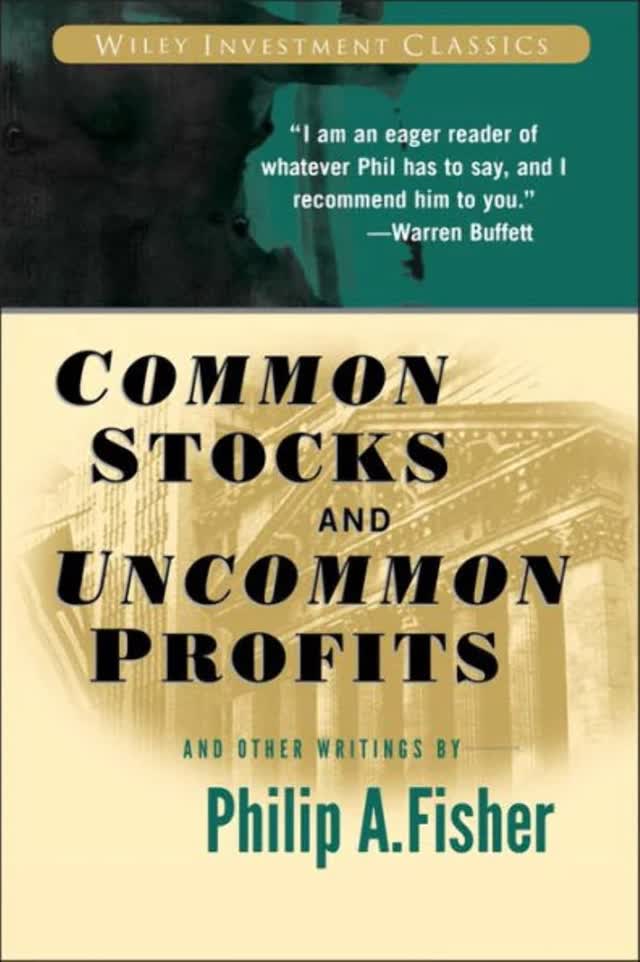 Cover of Developing an Investment Philosophy by Philip A. Fisher.
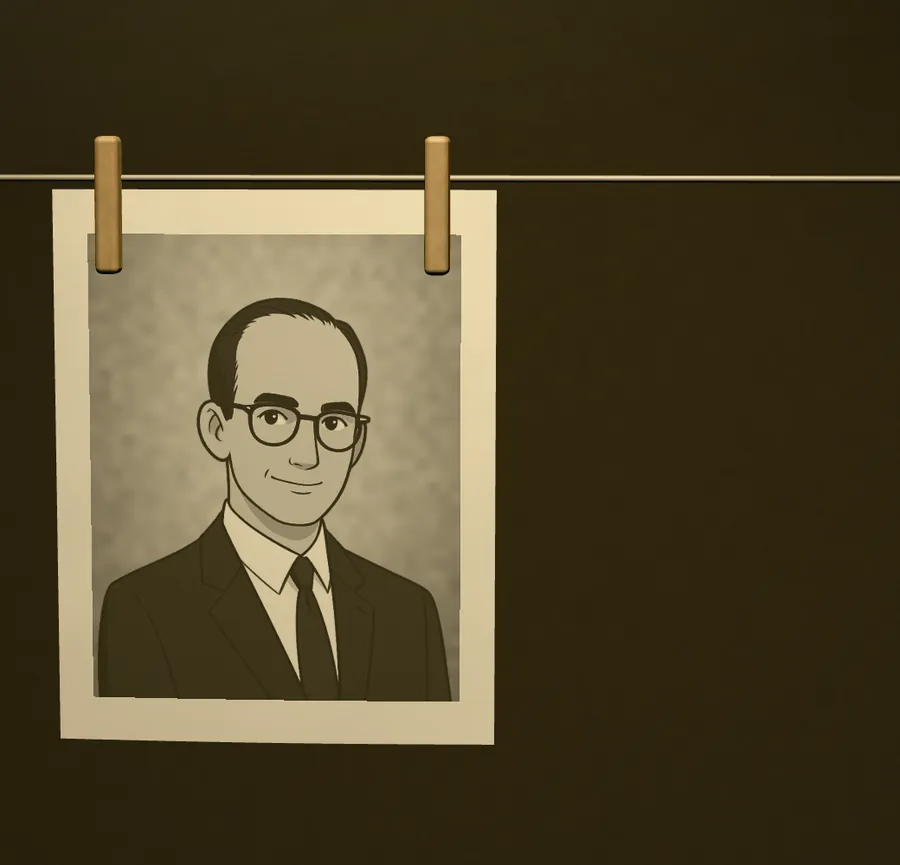
Published by Wiley, in Common Stocks and Uncommon Profits and Other Writings. Cover shown to identify the book. Philip A. Fisher drawn as an editorial caricature.