Finance · 03
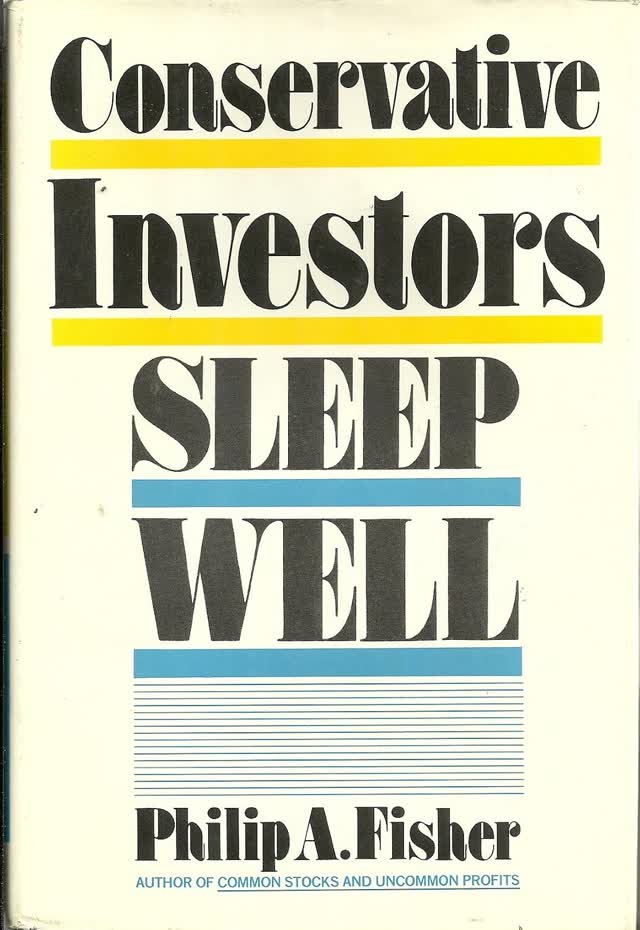
Conservative Investors Sleep Well
Philip A. Fisher
Safety comes from strong, adaptable businesses bought at sensible prices.
Five questions this book answers, each in a short piece. Read them, or listen as every word lights up.
The front
A familiar name is a front
Penn Central and Consolidated Edison had passed the conventional tests of conservatism. Their names gave investors a reassurance the businesses failed to justify.
A dependable payment can mislead the same way. Fisher measured safety by purchasing power, and a payment that arrives on time can still buy less every year that prices rise. A familiar name, an impressive dividend or a long history cannot establish safety.
Behind the front
Built all the way through
Fisher measured an investment in four dimensions, and price was only the last. The others ask how well the business produces, sells, researches and finances, how capable its people are, and what rivals cannot easily copy.
Strength has to keep renewing itself. As products become easy to copy, a company that can afford to keep changing replaces them with offerings customers cannot readily find elsewhere.
His preferred purchase is strong in all three and priced as if it were not. Neglect can create the chance.
Read or listen
The five questions
In the order the book argues them.
- If your savings must fund decades of living costs, when can an investment paying fixed interest be riskier than shares in a growing business?The risk inside a dependable paymentA payment can arrive on time and lose buying power. Fisher asks which businesses can protect it, and when fixed income still fits the job.
- When rivals can copy products, how can a company keep changing without sacrificing the financial strength that makes it safe?The company that can afford to keep changingStrong profits make renewal possible. Fisher asks whether the people, competitive advantages and spending decisions can make it worthwhile.
- If a share price already assumes years of success, when can an excellent business become a dangerous purchase but still be worth holding?When growth is already in the priceFisher explains how a business can fulfill its promise yet disappoint a buyer, and why an existing owner might still hold.
- When you cannot verify every claim yourself, how do you tell sound investment evidence from polished numbers and a confident expert?The work behind a confident answerPhilip Fisher's investigation begins with numbers, then asks what they mean and who has checked them.
- When markets and politics make action feel urgent, how can you stay patient without ignoring threats that could destroy your investment?When patience needs a reasonFisher separates the pressure to look successful now from changes that threaten a company's future or the owner's ability to wait.
Sleep well
The work comes first
Well-run companies keep developing better products, cutting costs and using their resources more efficiently. The market may recognize that progress later, in irregular leaps. There is no timetable for being proved right.
Patience still needs a reason. Fisher's owner keeps checking that the business deserves it, and then lets it work.
Start with question oneBuy the book
Published by Harper & Row. Cover shown to identify the book. Philip A. Fisher drawn as an editorial caricature.